
INTRODUCTION:
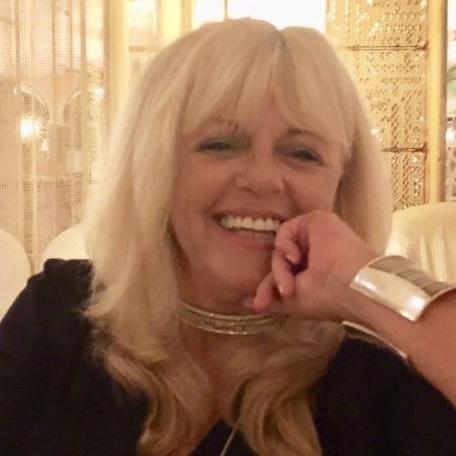
I have known Rosemary Nightingale’s name long before I ever met her, through the Gazette’s introduction page. So when I finally met her and she introduced herself, I knew exactly who she was. Since then, we’ve shared many chats over coffee and biscuits, and I absolutely adore her. If I had to describe her in words, they would be: Beautiful inside and out, brave, and compassionate. When you talk to her, you can’t help but feel her young, fresh spirit, her good energy and determination shine through. She’s a doer, not a quitter, and that strength comes through in every conversation.
What first drew you to Lanzarote, and how did you eventually come to own The Gazette Magazine?
I first came to Lanzarote on holiday with my sister, my daughter, and my Neice. We spent a week together, and on the final night, over dinner, something simply clicked. I remember thinking, I’m going to come back to this island. It was an instinctive feeling I couldn’t ignore, and it wasn’t just for another holiday. When I returned to Preston, I was running two newspapers in the UK. The numbers were strong, and I absolutely loved the work. It was proper old-school copy and paste, the whole process, and I adored it. Print was in my blood, and I was very good at it. But I also knew I couldn’t really move on in the UK because I already had my dream job. I was friends with my boss, the main man who owned 16 titles across Lancashire. His was getting older and clearly unhappy, and I could see the writing on the wall. If I stayed, I would be doing that job forever, and eventually it would become too much. After returning from LANZAROTE, I felt increasingly restless and unsettled, and I realised it was a now or never move. Lanzarote stayed firmly in my mind. I spoke honestly to my boss and told him I wasn’t settling. He told me, “No you don’t, you just need to get it out of your system,” and suggested I take two weeks away, which he paid for. When I came back, nothing had changed. By then, my daughter had already moved to Lanzarote because she knew that’s where I was heading, and that made the decision feel very real. He then said, “Let’s make a deal. I’m retiring in five years. Your job will always be here. What have you got to lose?”
In 1999, I came over to work for a small publication on the island. I knew print, and I understood publishing. Not long after I arrived, the owner stepped away, and I was to manage the business alongside Gaye Perryman and Barry Brown. I’d been there for 18 months, but it quickly became clear that despite the growth, the business was in serious trouble. Money had been misused, printers were refusing to work with us, and the company was effectively bankrupt. When the owner decided to sell, I offered to buy it. After speaking with my former boss and accountants in the UK, I was advised not to buy the business as it stood, but instead to proceed very carefully. Before long it became obvious that nobody would print the magazine; printers in those days stood together in solidarity. I had given up everything to be here on Lanzarote my job, my pension, my security. That moment, difficult as it was, became the turning point. It pushed me to take control of my own future: did I go back or build something properly on my own terms? I decided I would stay, bought the equipment, leased the logo tippo on a monthly basis, created a new company and premises, and moved forward.
Did you ever imagine yourself running your own magazine on the island?
Honestly, yes. Publishing is all I’ve ever done; it’s what I know and what I understand. When the opportunity to take the magazine forward first came up, I was ready to take that chance. The island had something I couldn’t ignore. At the time, there was very little local English-language INFORMATION available. What did exist came out only every few months and didn’t really reflect the life of the island or speak to the wider community. I could see a real gap, something that was needed, and I knew I could fill it. The longer I stayed, the clearer it became that this wasn’t just a job or a business decision. It felt right. It grew out of experience, instinct, and timing rather than ambition. I didn’t plan it. It found me.
What was your vision for the publication when you took over?
I created it completely from scratch, because what existed before wasn’t even really in English. I changed everything and rebuilt it properly. By that point, I had a real feel for the island and for the people living and investing there, and we started gaining a real following in 2003. My vision was simple but very clear: people who were heavily invested in Lanzarote through property, businesses, or long-term living were not being given basic information in an English-speaking format about what was actually happening on the island. I don’t mean English as in nationality, but English as a shared, international language. It’s my language, yes, but it’s also the common language for people from all over the world, which is why the magazine eventually attracted subscribers GLOBALLY.
Another key part of my vision was balance. I was determined to keep both residents and tourists happy, even though many people told me that wasn’t possible. The magazine wasn’t funded externally, so it had to work commercially. I followed a clear structure, around 60% advertising and 40% editorial, which allowed me to combine both markets into one publication. It wasn’t easy, but I knew it could work. We built the magazine layer by layer. I had a very clear picture of what I wanted, and I laid strong foundations from the beginning alongside my team, who were instrumental in the process. Everyone brought something valuable to the table, and we worked extremely hard together. Many of the team were with me for over 15 years and became like a FAMILY.
 What we created grew from a very small publication into a monthly magazine of 132 pages, with a print run of 10,000 copies. We had to print off-island, Sabater in Tenerife, because no local printer could handle that volume at the time. I was heavily involved in the production process and worked closely with the printer to get the format exactly right. We continued to give the 10,000 magazines free, but there was never enough available to satisfy demand due to its success. We expanded into airports, supermarkets, and key distribution points across the island for a 2€ charge. What started as something very small became a strong, professional publication that truly served the island and its community.
We also developed a strong lifestyle section, which covered everyday life on the island: gardening, homes, how people were living, and what was happening locally. We featured restaurants regularly, including all the nationalities on the island, which helped people who were living here really integrate and discover the island beyond the tourist experience. What made it work was the people. We were very fortunate with our team. Over the years, we had people from the UK, Norway, Ireland, Spain, and Portugal — a real mix. The only essential requirement was that everyone spoke English, because it was an English-speaking publication and communication in the office had to be clear. Beyond that, diversity was a strength. Everyone brought something different, and it created a very special working ENVIROMENT.
The magazine became a reflection of real life on the island. It wasn’t just “good news” or glossy features; it was real news. We covered everything: local issues, recycling, policing, transport, and community stories. We ran features like “a day in the life of,” spending time with recycling teams, police, and photographers — all the moving parts that make the island work. These features became cyclical and familiar, and people connected to them. We also did interviews with local figures when something important needed to be discussed, such as mayors, officials, and people shaping the island. Over time, the magazine helped readers feel integrated and understand how things worked here, from public services to cultural LIFE.
There was something for everyone: serious journalism, community stories, lighter lifestyle pieces, even the crossword. It became bigger than me much bigger. I had the time to build it properly, steadily, layer by layer. We kept it fresh, visual, and high quality, investing heavily in print because we wanted it to be something people would keep on their coffee tables and pick up again and again.
One moment really brought that home for me. A retired English judge came into the office one day wearing a tweed suit, clearly upset. He told me two Gazette magazines had gone missing from his home library and asked if I could help replace them. The emotion in him made me realise just how deeply people trusted and relied on the magazine. That moment showed me we weren’t just producing a publication anymore we were part of the COMMUNITY.
What made The Gazette different from others?
The most important thing for me was consistency and connection. News doesn’t stop just because people are on holiday or living part-time on the island. Many of our readers owned holiday homes or were only here for part of the year, but they still wanted and needed to stay informed. My vision was always to help people keep up with what was happening not just the big stories, but the everyday reality of life on the island. Even when people weren’t physically here, they still wanted to feel connected, to know what was changing, what mattered, and what affected their lives and INVESTMENTS.
We focused on staying in touch with the island constantly. Keeping up with the news, the articles, the ongoing stories. It wasn’t about sensationalism; it was about relevance and reliability. I wanted readers to trust that when they picked up the magazine, they were getting a true picture of the island at that moment. That sense of continuity, of always being informed, was central to my vision from the very beginning. To achieve this, The Gazette sent 500 magazines every month to different countries across Europe, allowing people to follow the news from abroad and stay connected to LANZAROTE.
Which editorial editions are you most proud of and why?
I’m proud of all of them, really. Each edition had its own significance, and some naturally stand out more than others, often because of the cover or imagery. One edition I’m particularly proud of involved a very special story about DAVID CAMERON, who was the UK Prime Minister at the time. He came to Lanzarote for a private holiday, staying at a place called Flora in La Geria. I knew that in England people like Michael Palin had brought attention to Lanzarote by calling it Lanzagrotty, and I thought it would be wonderful to have a personal perspective from David Cameron himself.
I wrote to him, explained the story about Michael Palin, and asked if he could share a paragraph about the island. I didn’t hear back immediately and assumed he had left the island. Then, days later, while I was on holiday myself, I received an email from him. Not just a paragraph he sent three long paragraphs describing how much he loved the island, going into detail about his favourite places to eat and saying it was one of the best holidays he’d ever had. It was amazing because he saw the same Lanzarote that I LOVE and wanted to share it with others. His last line said it was certainly not grotty.
What are the toughest decisions you’ve had to make as the owner?
The toughest decisions were always about letting go. When the global recession came in 2008, there was virtually no print on the island except The Gazette. I had to let go of all our other products Viva, Insel, Fuerteventura, and the specials we produced for others. It was the end of a chapter, but I couldn’t let go. I had poured so much into building an empire: my time, my energy, my heart. Stepping back felt impossible.
We had a large team. Many went back to their own countries, but the GAZETTE family was at home here, with families, mortgages, and lives they couldn’t leave myself included. That period was one of the most challenging in my life. I had no clear path and wasn’t sure how we would get through it. The Gazette was my baby, and I realised it would break me to lose it. We moved forward not knowing if we would survive the crash or lose everything. It was a gamble, but one worth taking.
We gave up the office we had invested in and produced the Gazette from my home for a while to see if we could pull it off. The Gazette family were incredible. We all pulled together, and I have never felt prouder of their support and belief in me.
In 2019, when my mother was coming to the end of her life, the Gazette team repaid that loyalty. They kept things running for 10 days of each month so I could be with her, and I returned for 10 days to see the Gazette off to print. We did this for six months. When my mum died, I couldn’t settle. I had lost several key people in my life and needed time out. I signed over the Gazette to the team in January 2021. Watching the magazine continue to thrive under the Gazette family gave me peace, even through the uncertainty of COVID. Today it is digital and has moved forward in leaps and bounds. The hardest part was accepting that sometimes, no matter how much you love something, the best thing you can do is let it grow without you.
Looking back on that chapter of your life, how do you feel now?
 I feel an immense sense of pride and gratitude. I was incredibly fortunate, but it wasn’t just me. Without my team, I wouldn’t have had a chance. They were like a family loyal, supportive, and committed. One story always stands out: during the crash, a small antique shop in ARRECIFE insisted on paying what they owed, even when I told them it wasn’t necessary. Instead, they offered me two very old maps of Lanzarote, which I had framed and still treasure today. Moments like that show the integrity and quality of people on the island.
We worked long hours, argued over details, celebrated every edition when it went to print, and shared a sense of teamwork that made the whole process magical. I also had incredible support from subscribers and advertisers, which reinforced a simple truth: you cannot do something like this alone. The journey is always about the people around you and the community you SERVE.
What are you doing currently, Rosemary?
Right now, I’m busy with a couple of important projects. I’m working with my sister in America on an initiative that’s very close to our hearts. It’s about what we all share in common and the sense of belonging we all have, with the aim of teaching children from a young age that we are all connected. If it succeeds, it has the potential to be global.
I’m deeply involved with the non-profit GASQUE SPORTS FOUNDATION because I believe every child on Lanzarote deserves the chance to experience sport no matter their background, finances, or ability.Over 40 years ago, Kenneth Gasque brought IRONMAN to Lanzarote and changed the island forever. It transformed our economy, our identity, and created opportunities that so many have benefited from.
When Kenneth was honoured with a statue, he said he wanted to give back. For him, success is responsibility and that’s why we formed this non-profit Foundation. Sport has given so much to Lanzarote. Yet there are still children who, for financial, social, or physical reasons, don’t have real access to participate.That is not acceptable. This is about inclusion, opportunity, and leadership stepping up as a community, as businesses, as institutions, to give every child the CHANCE to belong, to grow, to discover what they can achieve. If sport helped build this island, then it must now help build its future.
Our island. Our children. Our responsibility.
